Accounting
Books that balance, with the history behind every number
A double-entry, append-only ledger underneath everything. Cash and accrual from the same entries. Owner money kept apart from company money and reconciled three ways.

How the ledger works
Every charge, payment, bill, fee and distribution posts as a balanced journal entry. Posted entries are never changed or removed. A mistake is fixed with a linked reversing entry, so the history stays whole.
Every balance you see, on a tenant ledger, an owner statement or a report, is derived from those lines. A diagnostics page compares stored totals with totals rebuilt from the lines and flags any difference.
Money is stored in whole cents. There is no rounding drift between a receipt, a statement and the bank.
Everything in the books
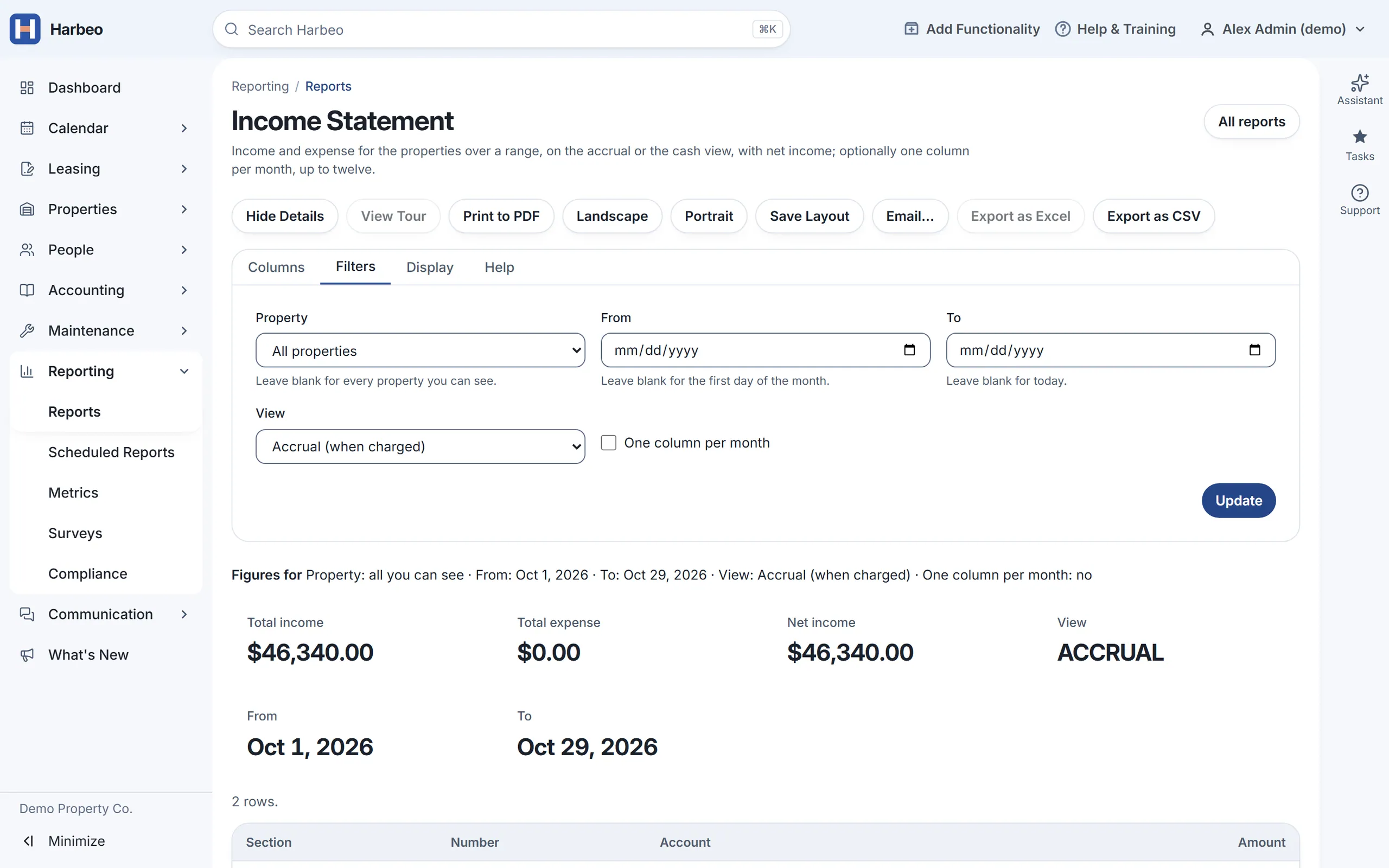
Cash and accrual
Both views from the same entries, per property.
Owner distributions
Calculated from available cash after reserves, previewed, approved by a second person, paid and posted.
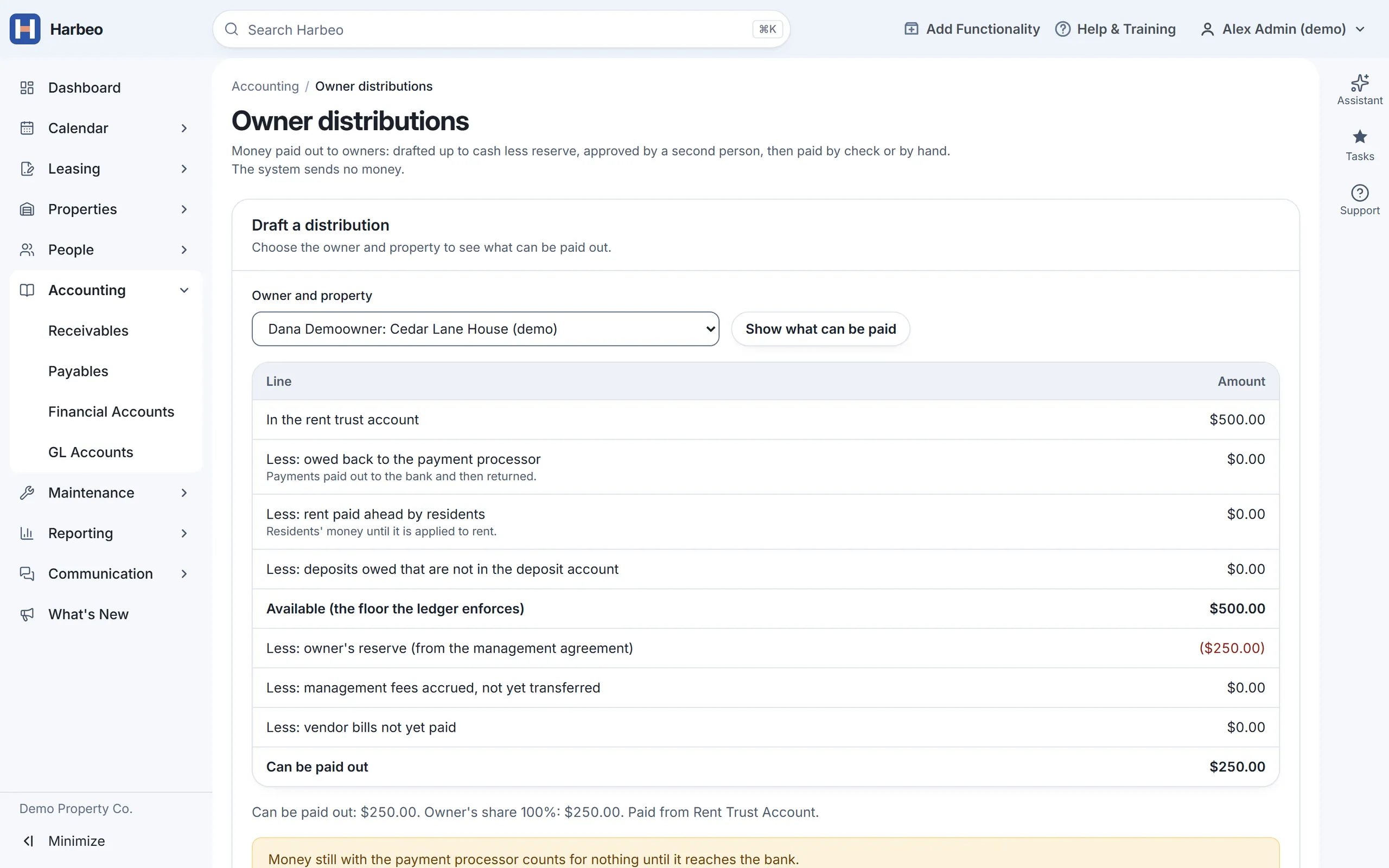


Chart of accounts
Import yours from a file. Charge types map to accounts.
Journal entries
Hand-written balanced entries and recurring entries.
Period close
Close and lock a period. Reopening takes two people and leaves an audit row.
Vendor bills
Bills coded line by line with attachments, a duplicate-invoice warning, recurring bills and an approval threshold you set.
Payment runs and checks
Pay bills from one bank account in a run. Print checks from the register, void and reissue.
Management fees
Fees from each agreement's terms, with minimums and carry-forward, previewed before posting. Leasing, renewal, maintenance and project fees too.
Owner statements and packets
A statement per owner per month across their properties. Month-end packets published to the owner portal.
Bank reconciliation
Import a CSV or OFX statement, auto-match by amount and date, match the rest by hand, lock the report.
Three-way trust check
Bank balance, ledger balance and the sum of owner and deposit balances, compared per client-funds account.
Budgets
A budget per property, per account, per month, with budget versus actual on the income statement.
1099 data
Totals per vendor and owner above the threshold, exported to CSV for year-end filing.
Company books kept separate
Accounts are marked company or client funds, and the two never mix in a report.
Common questions
Can we fix a posted entry?
Not by editing it. You post a reversing entry that links to the original. Both stay visible.
What stops an owner being overpaid?
Distributions draw on available cash after the property and owner reserves. A second person approves before anything is paid.
Will it match our accountant's view?
The trial balance, general ledger and balance sheet are standard reports from the same lines. Ask for a demo and bring your accountant.
Other areas
- PaymentsRent by bank account or card through the processor's hosted fields, autopay, offline payments, refunds, returns, disputes and reconciliation.
- MaintenanceResident requests, work orders with technician and vendor assignment, inspections with photos, purchase orders, inventory, projects, unit turns and bill-backs.
- PortalsResident, owner and vendor portals under your company's name, plus an applicant status link. Pay rent, request repairs, read statements, approve work.
- ReportingRent roll, delinquency, income statement, balance sheet, trust balances, work order aging, lead conversion and an audit log, each exportable to CSV.
Walk through the books
We can close a month, reconcile a bank account and run the trust check in front of you.